







Meeting new people online can feel surprisingly awkward when every social app seems designed for an audience you already know. BeFriend: make friends nearby takes a more direct approach: it is a social app built around discovering people, matching with them, and starting conversations. I found the first few sessions easy to understand, especially if the goal is simply to find new contacts rather than maintain a polished public profile.
My first impression was that BeFriend is most appealing when I treat it as a low-pressure way to widen my social circle. The basic idea is familiar, but the nearby-friend angle gives it a clearer purpose than a general social network. It is free to install, although in-app purchases range from $0.99 to $84.99 per item, so I would pay attention before buying anything. The app is aimed at Teen users, which makes careful judgment especially important when deciding who to contact.
What BeFriend feels like during the first week
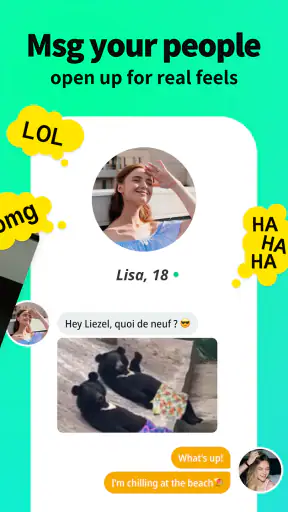
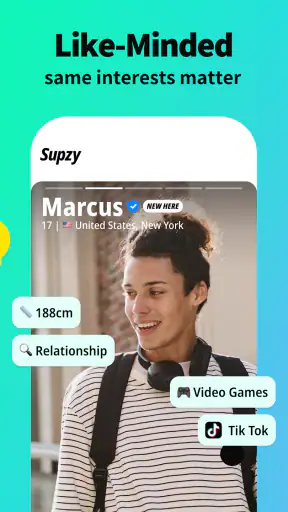
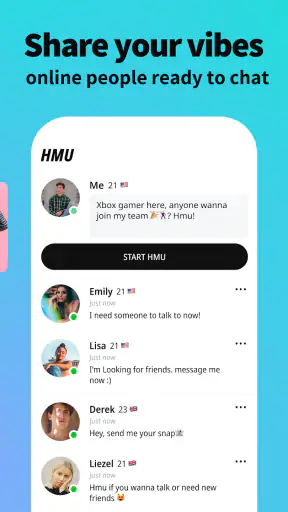
The opening experience is built around quick decisions. I can browse people, decide whether I am interested in connecting, and move toward a chat without needing to understand a complicated system first. That simplicity is the strongest part of the app. Someone who has never used a friend-discovery service can grasp the basic rhythm quickly: look, choose, match, and talk.
That rhythm also explains the early appeal. A quiet evening can turn into a handful of new conversations, and the nearby focus makes the idea feel more practical than collecting distant online contacts. I would use it after moving to a new area, starting at a new school, joining a new workplace, or simply wanting to meet people with similar interests outside an existing friend group.
The important distinction is that a match is only an opening, not a friendship. BeFriend makes it easy to start a connection, but the quality of the experience depends on what happens after the initial decision. I found that a short, specific message works better than a vague greeting. Mentioning a shared interest or asking an easy question gives the other person something to answer and helps separate a real conversation from a silent match list.
A realistic everyday use case would be a student who has just moved and does not yet know anyone nearby. Instead of posting publicly and waiting for replies, that person can spend a few minutes browsing potential contacts, matching with people who seem approachable, and chatting before suggesting a group activity in a safe public place. The app is useful in that early bridge between “I want to meet people” and “I know enough about someone to decide whether I want to continue talking.”
Still, I would not rush into sharing personal details. The nearby aspect can make a connection feel familiar before it really is. I would keep early conversations inside the app, avoid revealing an exact home address or daily routine, and involve a trusted adult where appropriate. For younger users in particular, the Teen rating should not be treated as a guarantee that every interaction will be comfortable or suitable.
BeFriend comes from ORBITECH PTE. LTD. and has been available since November 7, 2020. Its continued presence suggests that the concept has found an audience beyond a brief launch moment. The app currently shows a 4.4 average from around 84 thousand ratings, with more than 5 million installs. Those figures make it easier to see why a newcomer may encounter an active pool, but they do not remove the need to judge each conversation individually.
The matching loop is useful, but not magical
The swipe-style flow is familiar enough that it requires little explanation, yet it can encourage fast judgments. A profile that looks interesting may lead to a good exchange, while a quick dismissal may remove someone who would have been a better friend than their first impression suggested. I recommend slowing down occasionally and deciding what I actually want from the app: casual chat, local companionship, shared hobbies, or a path toward meeting offline.
That small change matters because different goals require different behavior. If I swipe without a clear purpose, I accumulate possibilities rather than relationships. If I choose fewer conversations and put more thought into the first message, the app feels less like an endless feed and more like a tool for making deliberate introductions.
One useful habit is to set a short session limit. I can browse for a few minutes, reply to existing conversations, and then leave instead of continuing indefinitely. This protects attention during the novelty phase and gives me a better sense of whether the app is producing meaningful contacts. If every session consists of more browsing but no deeper conversation, that is a sign to change my approach rather than simply use the app more.
Whether it still earns attention after the novelty
The first month is where BeFriend has to prove itself. New profiles and fresh matches create an obvious burst of interest, but lasting value comes from turning introductions into repeat conversations. In my experience, the app is better as a starting point than as a complete social life. It can help me find people I would not meet through existing circles, but it cannot create trust, shared memories, or dependable friendship on its own.
The strongest long-term use is situational. Someone who has recently relocated may benefit for several weeks while building a local network. A person who is shy in face-to-face settings may appreciate having time to think before replying. Someone looking for a particular hobby community may also find the matching format less intimidating than walking into an unfamiliar group. In each case, the app has a clear job to do.
Its value is weaker when I already have an active local social circle and only want another place to scroll. General social networks are usually better for keeping up with people I already know, while dedicated community platforms can be better for organized interest groups. BeFriend sits between those options: more personal than a broad public feed, but less structured than a club, forum, or event service.
That middle position is both its advantage and its limitation. I can meet people without committing to a formal group, but the app does not automatically give the connection a shared activity or reason to continue. I have to supply that structure myself. Asking about a local café, a favorite game, a study routine, or a weekend interest is more productive than expecting the match screen to carry the relationship.
How to turn matches into actual friendships
I would use a simple three-step workflow. First, I would match selectively instead of trying to maximize the number of contacts. Second, I would move from small talk to one concrete shared interest within a few messages. Third, I would suggest a low-pressure next step, such as continuing the conversation later or joining a public group activity. This approach reduces the number of abandoned chats and makes the app feel more purposeful.
Another practical tip is to review conversations before starting new ones. A reply to someone I already matched with is usually more valuable than another round of swiping. This is where many social discovery apps lose their usefulness: they make finding people easier than remembering why I wanted to talk to them. BeFriend works better when I treat matches as relationships to manage, not items to collect.
I would also keep expectations modest. Not every match needs to become a close friend, and a short, pleasant conversation can still be a worthwhile result. The app becomes tiring when I measure success only by long-term friendships. It becomes more sustainable when I recognize smaller outcomes, such as finding a local recommendation, discovering a shared interest, or becoming comfortable enough to start conversations with strangers.
The maintenance burden is mostly social, not technical
Using BeFriend does not require a complicated routine, but maintaining value does require attention. I need to keep my profile representative, respond when I genuinely want to continue a conversation, and remove chats that feel uncomfortable or clearly one-sided. That can sound simple, yet it becomes work if I match with too many people at once.
The best maintenance habit is selectivity. A smaller group of active conversations is easier to handle than a large queue of half-finished introductions. I would rather return to two people whose interests genuinely overlap with mine than feel obligated to answer everyone. This also makes my own behavior more respectful, because I am less likely to disappear after creating expectations through constant matching.
Safety is part of that maintenance. I would avoid sending sensitive information, remain cautious about requests for money or private images, and treat pressure to move immediately to another platform as a warning sign. If a conversation becomes manipulative, sexual, threatening, or simply unsettling, ending it is more important than preserving a match. A social app should support my boundaries, not make me feel guilty for using them.
For teenagers, adult guidance can be especially valuable. The Teen content rating indicates the intended age range, but it does not replace common-sense supervision or personal caution. I would recommend discussing safe online behavior before using the app, including what information should remain private and how to handle invitations to meet. Any offline meeting should happen in a public setting, with someone trusted aware of the plan.
Where fatigue starts to appear
The main source of fatigue is repetition. Browsing similar profiles, making quick decisions, opening chats, and repeating the process can feel active without necessarily producing progress. The novelty is strongest at the beginning, when every match feels like a possibility. Later, the same loop can become background scrolling unless I have a clear reason to return.
Conversation quality is another pressure point. A matching system can create an opening, but it cannot guarantee compatible personalities, reliable replies, or genuine interest. Some chats naturally fade, and others may feel unbalanced if one person continually carries the conversation. I see this as a limitation of the format rather than a defect unique to BeFriend, but it still affects whether the app deserves a permanent place on my phone.
There is also a trade-off between speed and judgment. Fast matching lowers the barrier to meeting people, yet it encourages decisions based on limited information. Slowing down improves selectivity but reduces the feeling of constant discovery. I would not use the app when I am already tired, lonely, or looking for instant reassurance, because those moods can make a weak interaction feel more important than it is.
Purchases may add another layer of friction. The app is free, which makes trying it straightforward, but optional items can cost from $0.99 to $84.99 each. I would use the free experience first and decide whether the app is providing real conversations before spending anything. A paid option cannot fix an inactive chat, poor compatibility, or a lack of effort from the people I meet.
The current version is 11.6.3 and it requires Android 8.0 or later. That makes checking device compatibility worthwhile before installing, especially on an older phone. On supported hardware, the practical question is less about whether the app can be opened and more about whether it fits my routine without taking over it.
My long-term verdict on BeFriend
After the initial excitement fades, BeFriend earns space when I use it with a specific purpose. It is a convenient way to discover potential friends nearby, start conversations, and test social connections that might never appear through my usual circles. The experience is especially convincing during a move, a new school term, a change in routine, or any period when meeting people naturally feels difficult.
I would not recommend it as a replacement for real-world communities, established messaging apps, or close friendships. If my priority is organizing events around a hobby, a specialized community may serve me better. If I only want updates from people I already know, a mainstream social network is more efficient. If I dislike judging profiles quickly or managing uncertain conversations, the swipe-and-match format may feel more draining than helpful.
For the right user, however, the app has a meaningful role. Its free entry point makes experimentation easy, its straightforward matching flow removes some social friction, and its nearby orientation keeps the goal grounded in potentially real connections. The lasting value comes from what I do after matching: asking better questions, setting boundaries, following up selectively, and moving suitable friendships toward shared activities.
My recommendation is to treat BeFriend as a bridge, not a destination. Give it a focused trial, keep the first conversations cautious, and judge it by the quality of connections rather than the number of matches. If it helps me meet even a few compatible people and gives those conversations room to develop, it has earned a recurring place in my routine. If it only encourages endless swiping, I would remove it without hesitation.
Overall, BeFriend: make friends nearby is a capable social discovery app from ORBITECH PTE. LTD. with a clear appeal for people who want to meet new contacts outside their existing circles. Its 4.4 average and audience of over 5 million installs show substantial interest, but my final judgment depends on the same test I would apply to any friendship app: does it help me build better conversations after the first match? Used deliberately, it can. Used passively, the novelty is unlikely to last.


